
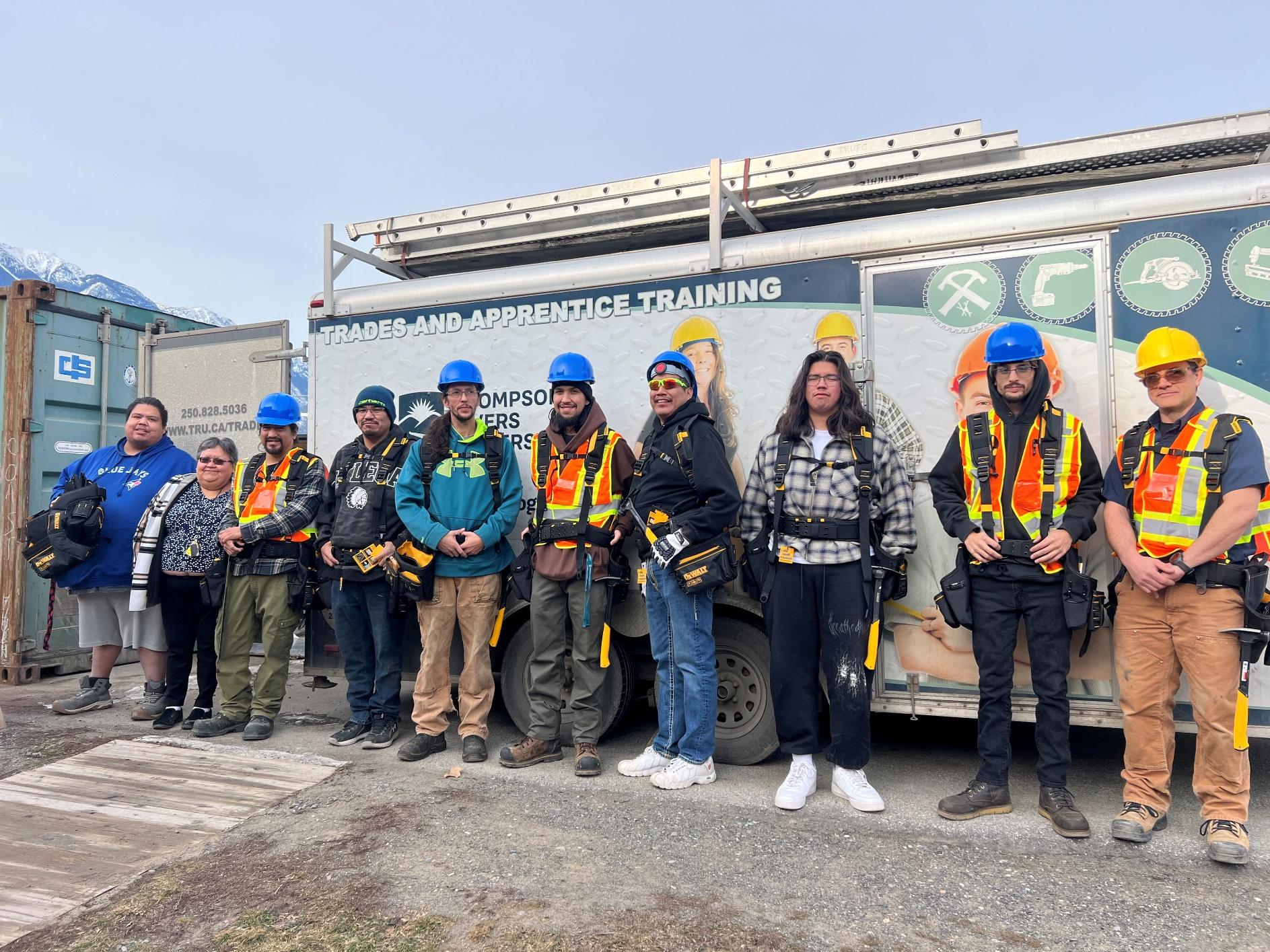
Rebuilding Through Skills: How Lytton First Nation Is Growing Local Capacity With Trades Training
In the wake of the devastating 2021 wildfire, Tl’kemtsin (Lytton First Nation) set out a bold vision: rebuild the community by building the skills of its people. In 2024–2025, that vision took a major step forward through a powerful partnership between Lytton First Nation (LFN), Thompson Rivers University’s School of Trades and Technology (TRU-STT), and the First Nations Market Housing Fund (FNMHF).
From December 2024 to June 2025, LFN hosted TRU’s Carpentry Foundation Program directly in the community, a hands-on training initiative designed to prepare learners for SkilledTradesBC Level 1 Apprenticeship outcomes. More than a program, it became a catalyst for community resilience, cultural pride, and long-term economic growth.
Bringing Training Home
Instead of asking learners to leave their families and travel long distances, TRU delivered the full program in Lytton. Equipped with tools, teaching materials, and expert instruction from TRU, students learned both in the classroom and on active construction sites – many of them the very homes being rebuilt in the community.
Instructor Glenn Smith described the learning environment as one of the best he has ever experienced. Students were able to participate in multiple stages of construction: framing, roofing, finishing, and even a concrete suspended slab build; opportunities rarely available in traditional training settings.
Cultural activities, including fishing, language learning, and cultural games, were woven into the program to strengthen identity, belonging, and pride. Learning became holistic, rooted not only in trades skills, but in community connection.
Community Partners Making an Impact
The program succeeded thanks to the collective effort of many partners:
- First Nations Market Housing Fund, whose support made in-community delivery possible
- Indigenous Skills Employment and Training Strategy (ISETS) and SkilledTradesBC, who provided additional student support
- DeWalt, which donated tools and equipment
- Local contractors, especially Mike Ford Construction, who welcomed students onto their job sites and offered many graduates employment
This collaborative approach ensured that students were trained on real projects with real mentors, strengthening both skills and confidence.
Results That Strengthen the Nation
The Carpentry Foundation Program delivered outstanding outcomes that will continue to benefit LFN for years to come:
- 15 students enrolled
- 12 students completed the program
- 11 successfully passed
- 8 secured employment by July 2025
- 7 were youth (18–29)
- 3 were women entering the trades
For students who faced health or financial challenges, TRU and LFN are already working on alternate pathways to help them reach their Level 1 goals in the future.
Building Capacity, Rebuilding Community
This initiative aligns directly with Lytton First Nation’s long-term goals: increasing employment, supporting housing reconstruction, and building a skilled workforce within the community. With the ability to train tradespeople at home, LFN is not only rebuilding structures. It’s building long-term resilience and self-sufficiency.
As LFN and TRU continue working together, they remain committed to breaking down barriers and creating accessible, culturally grounded pathways for Indigenous learners to pursue careers in the skilled trades.
FNMHF is proud to support community-driven training programs like this one; programs that empower Nations, strengthen local capacity, and contribute to vibrant, sustainable futures.