
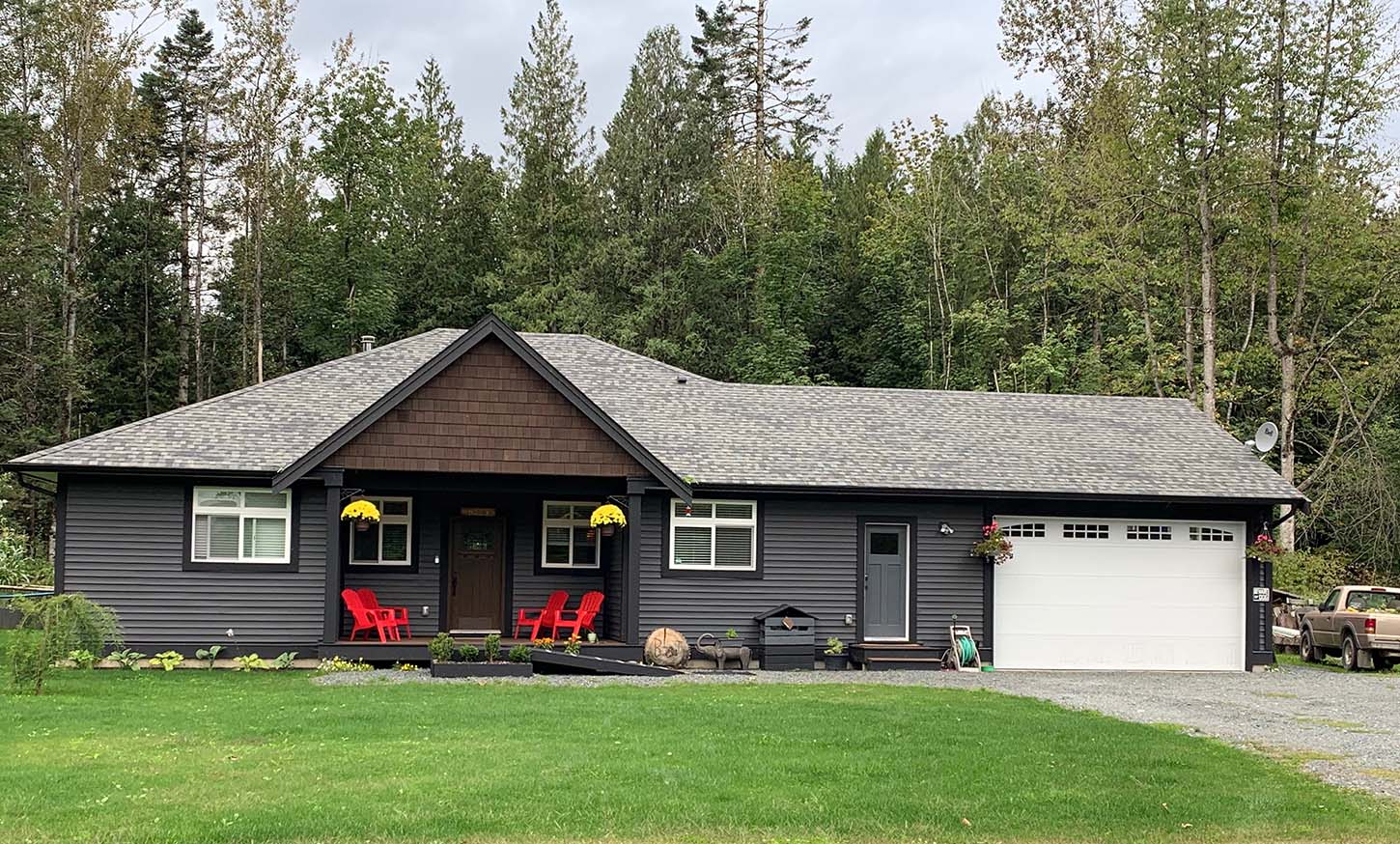
“I want to have an impact on people and dream of setting a standard of what we can do as Indigenous People.”
– Shawnrae Gabriel
Shawnrae and Brandy grew up with similar childhood experiences. Both were from families with a single parent and both moved multiple times. Brandy shared that, by the time she was 20 years old, she had moved 26 times. This instability, lack of roots and security is the driving force behind their dream of owning their own home.
“We poured our hearts and souls into building this home. It’s our forever home.”
– Brandy McCallumiel
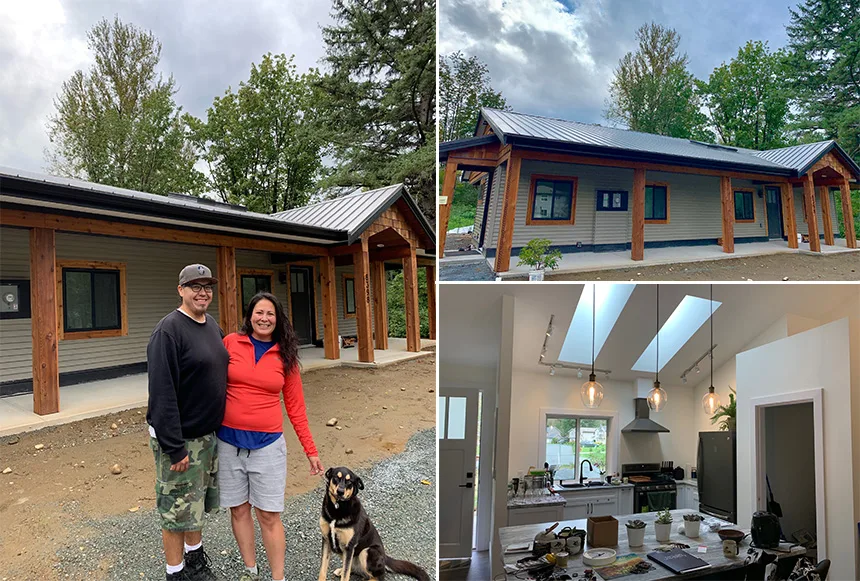
Brandy is from Waterhen First Nation in Saskatchewan. She grew up in the Nelson, B.C. area. She is an Education Assistant and enjoys art, music, and traditional dancing. She is currently taking classes to learn Shawnrae’s Halq’eméylem language. Shawnrae works at the Maintenance and Sanitation Department at Seabird Island and has a background in natural resources and forestry management. He has been living in the community for the past 15 years and considers it home; the longest place he has ever resided. He enjoys crafts, beading, traditional dancing and singing, and sports. Shawnrae is also continuing his education and is pursuing the Sustainable Energy Management program at BCIT. The couple share their home with Kenora, their rescue dog.
“My dream was to have a home that would make the most of the resources we have, and to make a commitment to live in a home that would last 30+ years to cement my legacy.”
– Shawnrae Gabriel
Brandy and Shawnrae set their sights on building a net zero energy home. They both stated that they learned a lot during the planning phase and building of their home. Brandy said it was difficult finding readymade plans for the home they desired, so they ended up hiring an architect who worked with them to design their dream home. Constructing a net zero energy home is more costly upfront, so it’s important to work with a contractor with expertise and experience in constructing eco-friendly homes. Every element of the building envelope must be carefully considered. The homeowners noted that it is really important to do your research on every element of the home, so you understand the impact it can provide and avoid costly mistakes. Their home includes a metal roof, radiant heated flooring, energy-efficient windows and lighting, and hot water on demand through a tankless water heater. There is no heating and cooling system. The building envelope keeps the home warm in the winter and cool in the summer. All appliances are energy star rated and include energy-saving modes for operation. Their first electrical bill, after adjustments for construction, was less than $40. The home also includes a water chain that will help them conserve water for use on their landscaping. Shawnrae pointed out that they do not pay for water today but that may change in the future. One needs to be forward-thinking especially in areas where water is hard to get. A rain filtering system is expensive but may be a future option. Their home was built to accommodate the future installation of solar panels and a generator.
Shawnrae and Brandy ended up parting ways with their contractor before their home was finished due to a difference of opinion. The homeowners wished to include a wood stove in the home, and the contractor was committed to building only passive homes which are airtight. This meant that the couple had to rely on their network of family and friends, some in the trade/ construction industry, to help them finish the home to the standard they desired. They did a lot of the work themselves, which saved them money. Carpentry has now become a new hobby. The couple explained that there are four steps to achieving a net zero energy home. Their home is currently at level one; however, these homeowners are already looking at further insulation options that would get them closer to their dream of a net zero energy home.
Shawnrae and Brandy’s advice for folks considering homeownership:
- Understand the costs of building your own home and look for ways to save money. For example, research sales on building materials and appliances.
- Ensure your finances are in order. The First Nation has set limits on the loan amount they will back through a guarantee, so you need to save up enough for a downpayment and the difference between the loan limit and the cost of building the home. It takes time to save money and is well worth it in the end. They moved into their home in 2019 and have already built equity in its value.
- If you wish to build an eco-friendly home, invest in the cost of the foundation and building envelope and work with a reputable architect and contractor with experience in this area.