
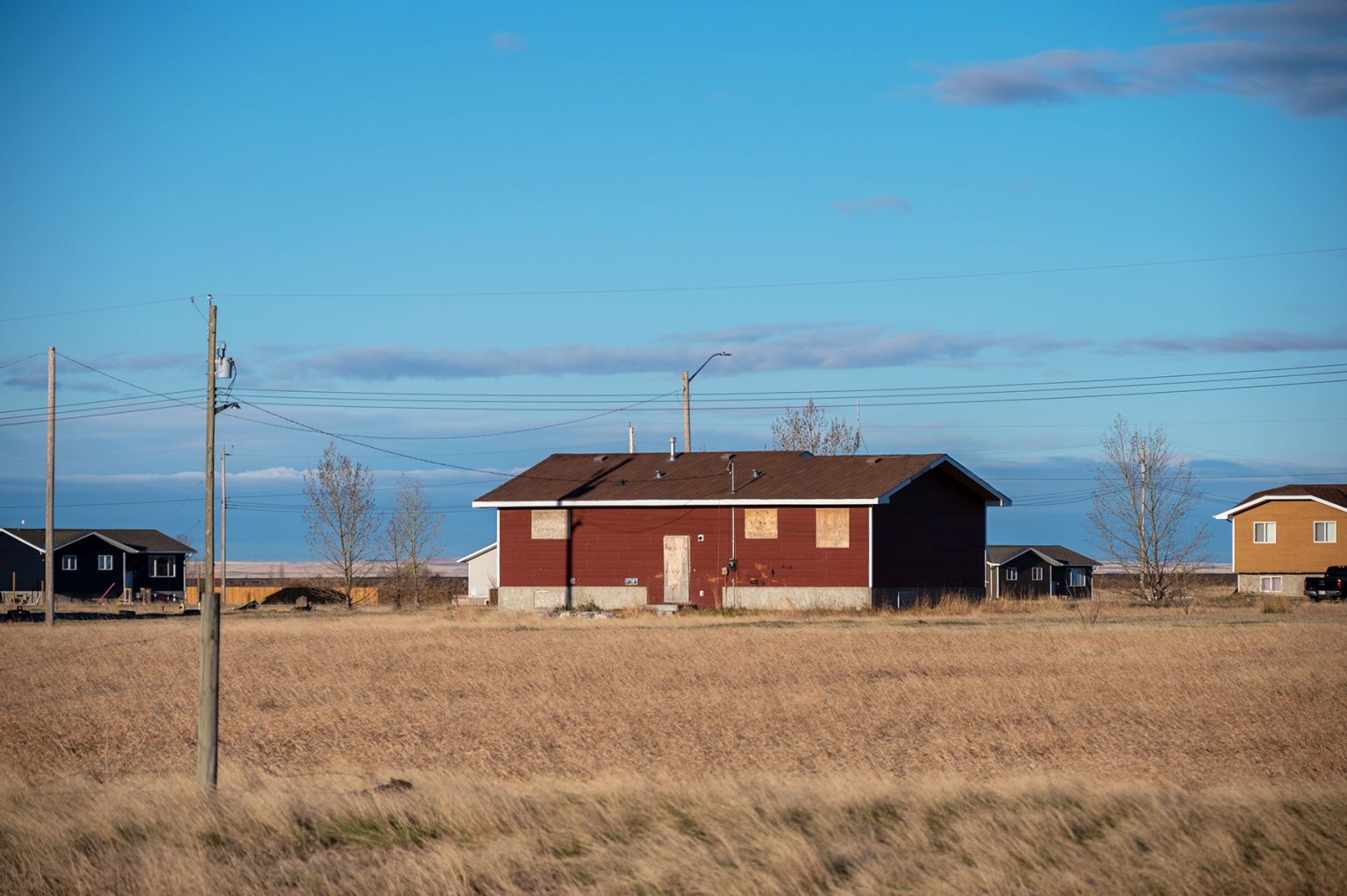
Distinct languages, cultural practices, and laws have sustained thriving First Nations communities for thousands of years. Shelters expressed a community’s shared values and beliefs and how people lived in relationship to the land and each other. They expressed how communities harvested and prepared food and stayed cool or warm. Whether the community changed homes with the seasons or mostly inhabited permanent homes, the structures were sized for the group that shared the space.
On-reserve First Nations housing now expresses the adaptation to the arrival of European settlers, technologies, and values. Displacement from traditional territories and disruption of traditional community roles and ways of being are a big part of that story. Western culture imposed a capitalist system where income is earned through jobs and homes are commodities that may be traded to gain wealth.
As communities respond to the impacts of colonization and work to regain sovereignty and land-based ways of living, this blog explores the barriers to wellbeing connected to inadequate housing within First Nations – and celebrates the return to First Nations ways of being that housing can support.
Overcrowding
In 2019, the United Nations Special Rapporteur on the right to adequate housing reported that a quarter of First Nations people on reserve lived in overcrowded conditions and overcrowding was approximately seven times the national rate recorded among non-Indigenous people.
At least $44 billion in housing is needed to meet the needs of the steadily growing First Nations population on reserve. Until then, multiple sources report that inadequate housing will strongly impact First Nations health outcomes.
Social Determinants of Health
The social and economic factors that influence people’s health interact to either promote or hinder individuals’ wellbeing. These may include income, education, employment, food security, health, and other factors.
First Nations people apply their skills and strengths to overcome the multiple factors that may be stacked and amplified to make daily life more challenging. For example, overcrowding can make it difficult to sleep well and affect the ability to pay attention at school or be alert at work. This can affect the quality and level of education received or the ability to keep a job, resulting in less income to save for a less crowded home.
Age, disability, gender, sexual orientation, race, and other distinctions can also amplify these barriers – which are already disproportionately experienced by First Nations people as compared to non-Indigenous people in Canada.
Living Conditions and Mental Health
It’s harder to find privacy and security and gain control over where, when, and how daily tasks happen in an overcrowded home. Levels of stress and depression may be higher without the freedom and space to work, play, sleep and do activities. Inadequate housing situations can severely affect individuals’ sense of self-worth and dignity.
The love and care shared in a home is critically important for good health. But living in a humid home with continuously peeling paint or mould growth can be demoralizing. Like the land, our homes can feel like an extension of ourselves. When a home is neglected, it can feel like we are neglected, too – and First Nations families and individuals often do not have much control over those situations.
Community, Land, and Mental Health
In 2021, it was recorded that 62.5% of registered First Nations people lived off reserve. This is in part due to a lack of housing and jobs. Connecting with and learning from the land can be a healing factor and access to places to harvest is necessary for many cultural practices. Without a home base where kinship and social ties can be fostered and culture practised, community members may be isolated from vital strength and support.
In a community, each life is tied to many others and has inherent value. As Phyllis Webstad’s phrase popularized by the Orange Shirt Day movement says, “Every Child Matters.” Every community member has the right to know their culture and deserves to feel valued. Barriers to living on reserve may negatively affect the mental health and self-realization of community members and future generations.
Communal Living and Cultural Transmission
The concept of the nuclear family, where only parents and their children live in a dwelling, informed the design of the pre-fabricated homes seen on many reserves today. A relatively new idea from the twentieth century, the single-family home does not honour many beliefs held by Indigenous Peoples worldwide about extended kinships and the importance of elders.
Today, First Nations are championing a return to living in multigenerational living spaces with large indoor and outdoor communal spaces vital to strengthening support systems and passing on culture and values.
Sharing duties like childcare, food preparation, maintenance, and repairs can decrease labour and help everyone feel like they’re contributing. Access to a wide social support network, including elders, is especially important for children and youth. These are vital years to build confidence in their role in community and feel the pride that comes with practicing their culture.
Health
Researchers have looked at overcrowding as a cause of increased rates of respiratory disease among First Nations people. Especially in homes where water must be boiled due to contamination, extra humidity causes mould and increases vulnerability to lung infections. Although communal living has health benefits, constant close contact can increase the spread of illness.
Injuries caused by living in housing in need of repair can range from a stubbed toe to smoke inhalation or burns from an electrical fire. These setbacks can affect the ability to do activities and have long-term physical and mental health effects.
Inherent Rights
Shelter is a basic human need and housing is a basic human right. When an individual does not have the wealth or ability to pay for or maintain a home, a community should have the resources to support them. To deny someone a home is to deny their right to exist – and dignity on their own territory.
The ability of First Nations to design homes that suit the diverse needs of communities and individuals, as well as the materials used, is key to achieving sustainable, suitable housing on reserve. Keeping elders and youth in community and providing spaces to gather will enrich community life and act as a tool for self-determination.
Achieving equity in one area of health determinants will not close the gap for First Nations people unless the housing shortage, need for repairs, and need for infrastructure are resolved. Access to safe, affordable and adequate housing on reserve is necessary to support efforts to improve all social determinants of health.
More Reading
Learn more about the extended health impacts of overcrowding, the urgent need for repairs, infrastructure challenges, and ingenious First Nations-led housing solutions in the First Nations Market Housing Fund June blog, 10 Things You Need to Know About On-Reserve Housing in Canada.